Core Close Activities: Part 2
2026-08-27
Notes on the month-end close
Picking up from where Part 1 left off, close calendar and ownership, cut-off, and accruals, this part covers the next two items on the same checklist: prepaids and fixed assets. Prepaids turned out to be accruals seen from the other side of the same coin, and fixed assets brought in questions Part 1 never had to deal with: what actually belongs in an asset's cost, how its life gets estimated and re-estimated, and what happens when an estimate turns out to have been wrong versus when it simply changes.

Activity 4
Prepaids
The mirror image of an accrual
Every accrual in Part 1 ran the same direction: the expense or service happened first, the cash followed later, and a liability sat in between. A prepaid runs the identical mechanism in reverse, cash goes out first, and recognition follows later, with an asset sitting in between instead of a liability.
Take the same AC maintenance contract from the accruals discussion, but flip the payment terms: instead of quarterly invoices in arrears, the company pays the full ₹12,00,000 upfront on 1 January, before any service is delivered. By 31 January, one month of service has been consumed. What sits on the balance sheet is an asset, Prepaid Insurance/Maintenance, not a liability, because the company is now owed future service, not owing anything.
The balance moves exactly the way the accrual's did, just with the entry reversed. After one month: Dr Insurance Expense ₹1,00,000 / Cr Prepaid Asset ₹1,00,000, leaving ₹11,00,000 still sitting as an asset.
| Accrual | Prepaid | |
|---|---|---|
| What happens first | Expense/service | Cash payment |
| What happens later | Cash payment | Expense recognition |
| What sits in between | Liability | Asset |
Fixed, contractual amounts carry over the same logic established for accruals, no averaging needed when the number is already certain from the contract.
The Prepaid Schedule
A single prepaid is easy to track from memory. Three or four running at once, each with a different start date and term, is where memory quietly fails, and the specific way it fails is worth being precise about.

Take three prepaids live at the same time: Insurance (₹1,20,000/year, ₹10,000/month, from January), the AC maintenance advance above (₹1,00,000/month, from January), and a trade-show sponsorship, ₹3,00,000 paid in April for exactly three months of benefit (April, May, June, at ₹1,00,000/month). By 30 June, the sponsorship's entire prepaid balance should be zero.
Correction that mattered
The risk isn't forgetting the monthly amount, it's forgetting the end date. An accountant working from memory alone, in July, is likely to keep amortising the sponsorship at ₹1,00,000 simply because that was the pattern for the previous three months. The result isn't a small error; it drives that line's balance to negative ₹1,00,000, a mathematically impossible position for an asset to be in (short of a genuine contra-asset, which this isn't).
A Prepaid Schedule, the same kind of master tracker as the accrual register, but carrying an explicit end date column for each item, fixes this two ways: as a preventive control, the end date stops the wrong entry from being posted in the first place; as a detective control, reconciling the GL's prepaid balance against the schedule's item-by-item total catches it after the fact if the preventive step was skipped.
The detective side has a specific blind spot worth flagging. On 31 July, the correct combined balance across all three items is ₹5,50,000 (₹50,000 + ₹5,00,000 + ₹0). If the sponsorship error above actually happened, the combined balance comes out to ₹4,50,000 instead, a number that, taken on its own, looks entirely ordinary. Nothing about "₹4,50,000" signals a problem; the negative balance that caused it is invisible once it's netted against two healthy positive balances. A reconciliation that only checks whether the combined GL total looks reasonable will miss this every time, it has to be checked line by line, against the schedule's own breakdown, not against a single top-level number.
The capitalization threshold
Not every advance payment becomes a tracked prepaid asset. A company might set a policy, say, anything under ₹5,000 gets expensed immediately in full, no schedule, regardless of how many months the benefit technically spans.
Correction that mattered
My first explanation for why this threshold exists reached for current ratio, the idea that small amounts are kept off the balance sheet to avoid moving that ratio. That doesn't hold up: a prepaid is a current asset either way, so whether an amount is capitalised or expensed, the current ratio moves regardless of which way it goes, only the direction differs. The real reason is materiality, the same cost-benefit principle behind the close-calendar levers from Part 1: building and maintaining a schedule has a real operational cost, and for an amount small enough that the choice of treatment can't meaningfully mislead anyone reading the statements, that cost isn't worth paying. A ₹12,00,000 annual contract treated the wrong way distorts a year's profit in a way that matters; a ₹1,200 magazine subscription treated the wrong way doesn't.
The threshold's exact boundary turned out to be a language question, not a judgement one. A payment of exactly ₹5,000, against a policy written as "under ₹5,000," doesn't fall inside the exemption, "under" (less than) and "up to" (less than or equal to) draw the line in different places for the exact same number, and only the policy's literal wording, not the size of the number, decides which side it's on.
When the benefit isn't spread evenly
Every prepaid so far assumed the benefit lands evenly across the term. That assumption breaks for a sponsorship deal: ₹12,00,000 for a cricket season running March to May, but the 60 matches across those months aren't even, 10 in March, 30 in April, 20 in May.

Straight-line would allocate ₹4,00,000 to each month regardless. But if the actual benefit, exposure, viewership, tracks matches rather than calendar days, the right allocation is a per-match rate: ₹12,00,000 ÷ 60 = ₹20,000/match, applied to each month's actual count.
| Month | Straight-line | Activity-based (matches × ₹20,000) | Effect |
|---|---|---|---|
| March | ₹4,00,000 | ₹2,00,000 | Straight-line overstates March |
| April | ₹4,00,000 | ₹6,00,000 | Straight-line understates April |
| May | ₹4,00,000 | ₹4,00,000 | Coincidentally equal |
This is the exact mirror of activity-based accrual estimation, a fixed rate multiplied by a measurable, non-calendar activity level, rather than an even split across time. Wherever a real, measurable driver of the benefit exists that isn't the calendar, allocation should follow that driver instead of the clock.
When the future benefit disappears: impairment
Everything above assumes the expected benefit eventually arrives in full. That assumption can fail.

Full impairment. Take the AC maintenance contract again: ₹5,00,000 remains prepaid by the end of July (seven months consumed of the twelve). In August, the vendor, Kool Air Services, ceases operations entirely, no refund, no future service, nothing recoverable. This isn't a timing question the way ordinary amortisation is; it's a question of whether the expected future benefit still exists at all. The whole ₹5,00,000 gets written off immediately, in the month the news arrives, not spread across the remaining schedule: Dr Impairment Loss ₹5,00,000 / Cr Prepaid Asset ₹5,00,000.
Partial impairment. A variant: instead of shutting down, Kool Air announces that from September onward it can only offer a basic cleaning service, worth ₹40,000/month on the open market, rather than the contracted ₹1,00,000/month. By the end of August, eight months are behind (Jan–Aug), leaving ₹4,00,000 committed for the remaining four months (Sept–Dec).
Worth flagging, since it happened live
Working through this scenario, an arithmetic slip briefly put the elapsed months at six instead of eight, throwing the remaining balance off (₹6,00,000 instead of the correct ₹4,00,000). Catching that a running total didn't add up against the months already established, and saying so, is exactly the kind of check worth making a habit of, regardless of which side of a conversation the number came from.
With the correct ₹4,00,000 committed balance: the remaining four months are now only worth ₹40,000 × 4 = ₹1,60,000 (the recoverable value). The impairment is the shortfall, not the whole balance: ₹4,00,000 − ₹1,60,000 = ₹2,40,000. The other ₹1,60,000 stays on the books as a genuine asset, representing real future benefit, and continues amortising normally at ₹40,000/month from September.
| Future benefit? | Write-off | Remaining balance | |
|---|---|---|---|
| Full impairment (bankruptcy) | None | Full ₹5,00,000 | ₹0 |
| Partial impairment (downgrade) | Reduced, not zero | Shortfall only, ₹2,40,000 | ₹1,60,000, amortises normally |
Impairment versus write-off. These aren't interchangeable words for the same action.
Correction that mattered
The instinct that "zero benefit = write-off, some benefit = impairment" is a reasonable guess, but it's not the actual dividing line. The real distinction is about certainty, not amount. Impairment is the company's own estimate that value has fallen, no external confirmation required, just a reasonable belief based on available information. Write-off requires an external, formal, confirmed event, a legal ruling, an official dissolution filing, something that removes doubt entirely. A friend whose job loss makes repayment look unlikely is an impairment-style estimate; a friend whose bankruptcy has been confirmed by a court is a write-off. Both the bankruptcy and the downgrade scenarios above are impairments in this precise sense, a vendor going quiet or reducing service is news, not a legal confirmation, however severe it looks in practice.
Can an impairment reverse? Say Kool Air's business recovers in December and it resumes full ₹1,00,000/month service.
Correction that mattered, twice over
The first instinct, since an impairment is "only" an estimate, it should be free to reverse just as easily as it was made, turns out to be too generous a rule as a blanket statement; Goodwill impairments specifically are never reversed, precisely to prevent a judgement-heavy write-down from becoming an equally judgement-heavy write-up used to manage profits. But the opposite instinct, "impairment never reverses, full stop," overcorrects: under Ind AS, most assets other than Goodwill genuinely can have their impairment reversed, capped at what the carrying value would have been had the impairment never happened. (This is a point where accounting frameworks genuinely diverge, US GAAP generally doesn't permit reversal outside Goodwill's strict treatment either; the Ind AS position reflects the Indian context this study is set in.)
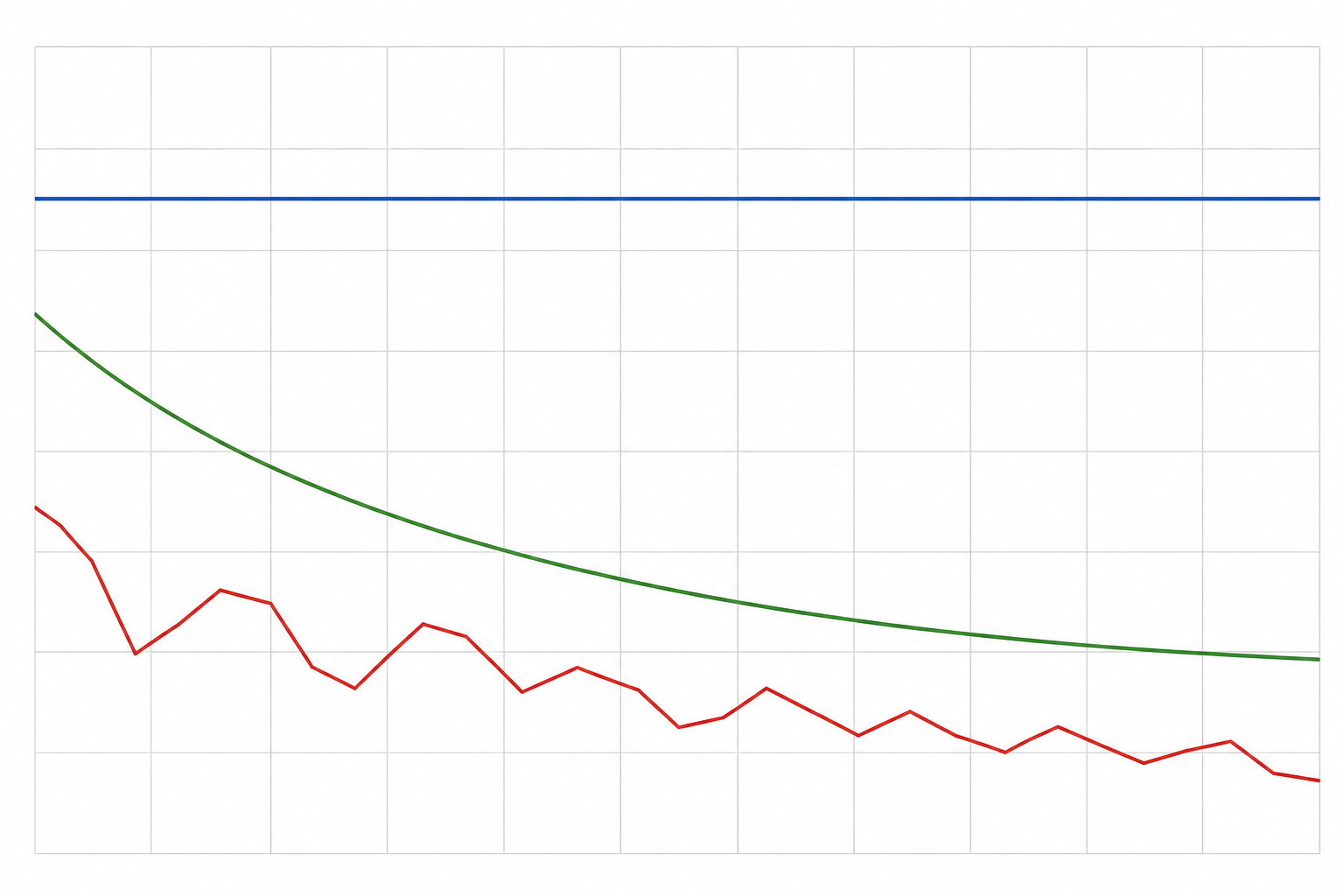
Working the December numbers through: without the impairment ever happening, the balance at the start of December would have been ₹1,00,000 (the "no-impairment" ceiling). Along the impairment path actually taken, the carrying value by then had fallen to ₹40,000 (₹1,60,000 after the September write-down, less three months of ₹40,000 amortisation). December's recoverable amount, now that full service has resumed, is ₹1,00,000. The reversal is the lower of the ceiling and the new recoverable amount, less the current carrying value: min(₹1,00,000, ₹1,00,000) − ₹40,000 = ₹60,000.
The sharper way to state the rule: the months that have already passed under the reduced estimate (September, October, November) are locked in permanently, they were real, elapsed periods, not future ones. Only the portion that was still in the future when the impairment was first estimated can be revised once new information arrives about it.
Estimating the recoverable amount. Every impairment number above depended on knowing the "recoverable amount," the standard method is to take the higher of two approaches: Fair Value less costs to sell (what the remaining benefit would fetch if sold or replaced today, when an observable market price exists) or Value in Use (the present value of the future benefit if kept and used, when no market price is available).
A software subscription illustrates the first approach cleanly: ₹6,00,000 for a 12-month enterprise plan, ₹50,000/month, with five months consumed (₹3,50,000 remaining balance) before the vendor forcibly downgrades the account to a Standard tier, publicly listed at ₹20,000/month, for the remaining seven months. The recoverable amount here is a direct, observable market price, no internal projection needed: 7 × ₹20,000 = ₹1,40,000. The impairment loss is the shortfall against the existing balance: ₹3,50,000 − ₹1,40,000 = ₹2,10,000.
Where accruals and prepaids actually show up across the close cycle
Both mechanisms, once understood individually, map cleanly onto the close lifecycle: pre-close, cut-off, accruals/adjustments, reconciliations, review, reporting, post-close.
| Stage | Accruals | Prepaids |
|---|---|---|
| Pre-close | Fixed, predictable accruals (AC maintenance) drafted early | Fixed amortisation (Insurance) finalised early |
| Cut-off | Decides whether a paperwork gap exists (goods received, invoice not yet in) | Not directly involved, the prepaid's trigger is the cash payment, not an event's timing |
| Accruals/Adjustments | New accruals booked; old ones reversed or reclassed as invoices land | Amortisation entries posted; impairment booked if a trigger arose this period |
| Reconciliations | The register becomes the source document the GL ties out against | The schedule becomes the source document the GL ties out against |
| Review | Trend-based, this month's estimate against this line's own estimate-vs-actual history | Reasonableness, does the remaining balance make sense against the remaining term |
| Reporting | Materiality/escalation decides the fate of anything still unresolved | Same |
| Post-close | Accruals still awaiting an invoice roll forward to next cycle | Small variances get cleaned up |
The thread running through every stage is ownership: a register or schedule only stays trustworthy if someone named is actually maintaining it each cycle. Without that, either one quietly goes stale, and the whole chain built on top of it, reconciliation, review, reporting, inherits a gap nobody can see.
Activity 5
Fixed Assets
Capitalization: what belongs in an asset's cost
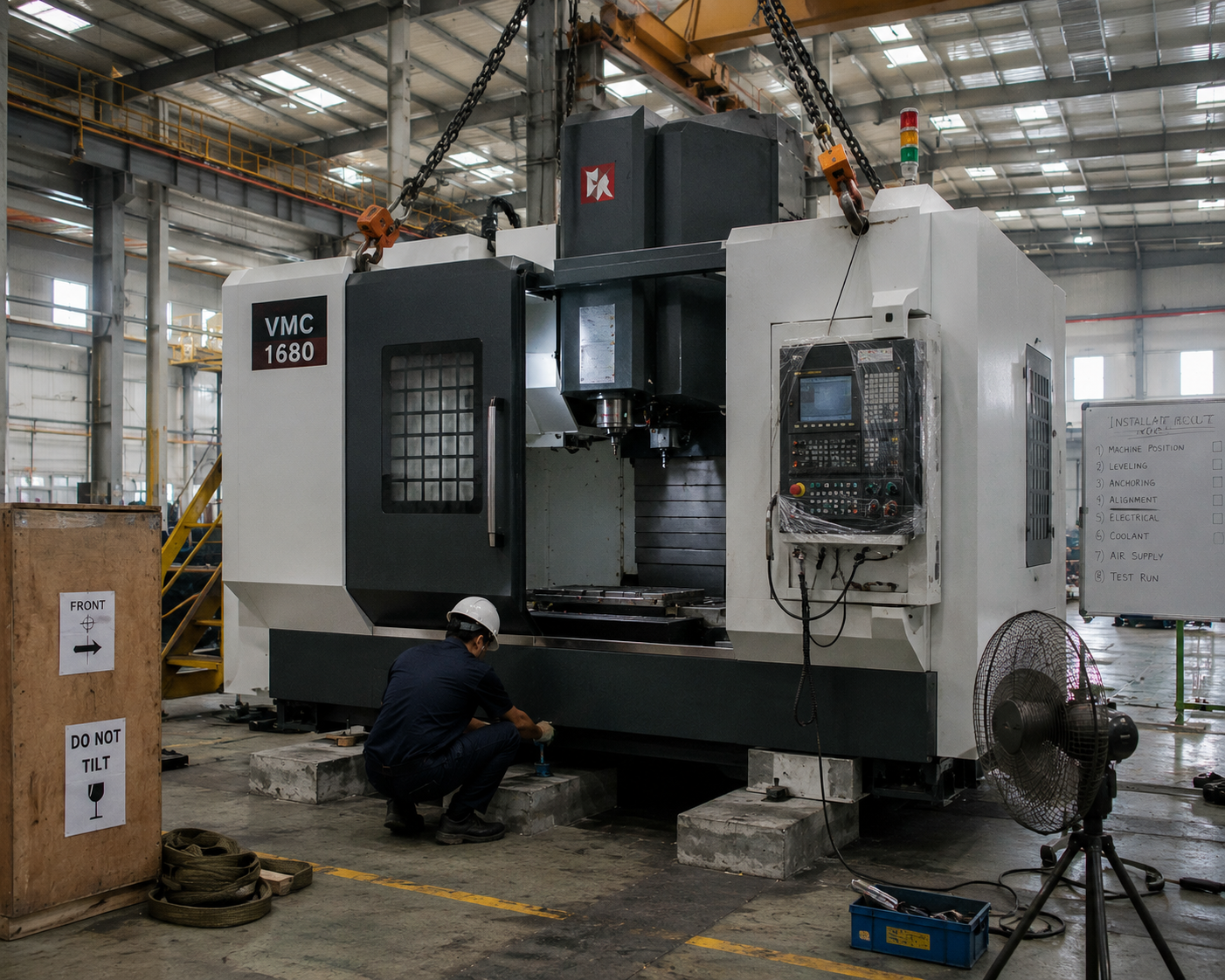
A fixed asset's capitalised cost is rarely just its invoice price. The governing test: does this cost bring the asset to its intended location and working condition? Everything that passes gets added to the asset's cost; everything else is expensed as incurred.
A machine purchase makes the boundary concrete:
| Item | Treatment | Why |
|---|---|---|
| Invoice price, less trade discount | Capitalise | The base cost of the asset itself |
| Non-refundable import duty | Capitalise | Without it, the machine can't reach its location at all |
| Freight to the factory | Capitalise | Directly gets the asset to its location |
| Installation and assembly | Capitalise | Brings the asset to working condition |
| Trial-run cost (net of any recovery from selling trial output) | Capitalise | Confirms the asset is actually in working condition before use |
| Staff training on the new machine | Expense | Builds a skill in people, not in the asset itself |
| Allocated share of general admin overhead | Expense | Would exist whether or not this machine was ever bought |
The total capitalised cost in this example: ₹20,00,000 (invoice) − ₹1,00,000 (discount) + ₹2,00,000 (duty) + ₹50,000 (freight) + ₹1,50,000 (installation) + ₹20,000 (net trial-run) = ₹23,20,000. Training and overhead, ₹40,000 and ₹20,000, go straight to the income statement instead.
Depreciation methods
Ind AS 16's governing principle: the method chosen should reflect how the asset's economic benefit is actually consumed, not default to whichever formula is simplest. Three methods follow from that.
Straight-line, used when benefit is consumed evenly over time. This was the only method used earlier in this study.
Units of Production, used when benefit tracks a measurable activity level rather than the calendar, the same logic as the cricket-sponsorship allocation applied to physical output. A stone-crushing machine costing ₹5,00,000, with an estimated residual value of ₹50,000 and a total lifetime capacity of 90,000 tonnes, depreciates at a fixed rate of (₹5,00,000 − ₹50,000) ÷ 90,000 = ₹5 per tonne. If demand varies, 20,000 tonnes crushed in a strong year, only 8,000 in a weak one, the depreciation charge varies with it: ₹1,00,000 versus ₹40,000, from the identical machine at the identical rate, purely because output differed.
Written Down Value (WDV) / Diminishing Balance, the rate stays fixed, but it applies to a shrinking base each year, so the rupee charge itself shrinks over time. A ₹10,00,000 delivery vehicle depreciated at 15% WDV charges ₹1,50,000 in year one (15% of ₹10,00,000, closing balance ₹8,50,000), then ₹1,27,500 in year two (15% of the new ₹8,50,000 balance, closing balance ₹7,22,500), same rate, smaller amount, because the base itself is smaller.
Why straight-line still dominates in practice.
Correction that mattered
The intuitive answer, companies mostly use straight-line because it's simply easier to calculate, isn't wrong exactly, but it understates two more substantial reasons. First, most fixed assets genuinely do have a flat benefit pattern: a factory building or a piece of furniture delivers roughly the same value in year one as in year twenty, unlike a laptop or vehicle that's most valuable early and loses relevance fast. Straight-line dominates because it's the correct match for the majority of real assets, not despite being the simplest option. Second, even where an asset's actual pattern is uneven, a company may still choose straight-line deliberately, trading a small amount of precision for consistency and comparability across periods and asset categories, the same materiality-and-practicality trade-off behind the close-calendar levers, not a shortcut taken out of laziness.
Estimate changes, error corrections, and what "retrospective" actually means
Re-estimating useful life. A ₹18,00,000 machine, originally given a 9-year life with zero residual, has been depreciating at ₹2,00,000/year. After 3 years (₹6,00,000 depreciated, ₹12,00,000 carrying value), an engineering reassessment revises the total useful life down to 6 years, meaning only 3 years remain, not 6.
Correction that mattered
The natural first instinct is to keep applying the old ₹2,00,000/year rate going forward, since "the rate" feels like a fixed fact once set. It isn't. The correct approach recomputes from the current position: new carrying value ÷ newly revised remaining life = ₹12,00,000 ÷ 3 = ₹4,00,000/year, from this point forward. The old rate is discarded entirely, not adjusted.
Under Ind AS 8, this kind of revision is treated prospectively, the change applies only from this point forward; nothing about the prior three years' financial statements gets touched or restated. That's true because nothing was wrong with the original 9-year estimate at the time it was made; it reflected the best information available then, and new information has simply arrived since.
When it's an error, not an estimate change. The distinction matters because the two are treated completely differently. An estimate change happens when a judgement made in good faith, on the best available information, later needs updating as new information arrives, the original number wasn't wrong, it just aged. An error is something that was wrong from the start, a miscalculation, a misclassification, a standard applied incorrectly, discovered later.
Neither one means reopening a period that's already been reported and issued. Once financial statements are published, they're permanent history; restating them on demand would destroy any confidence a reader could place in them. What differs is how the correction surfaces in the current period's report:
- Estimate change: the comparative figures for prior periods stay exactly as originally reported. Only the current and future periods use the new numbers.
- Error correction: the comparative figures for prior periods get restated to show what they would have looked like if the error had never happened, and the cumulative effect on everything before the earliest restated period gets folded into a direct adjustment to opening retained earnings, never routed through the current period's own profit and loss.
What a retrospective restatement actually looks like. Continuing the capitalisation example from earlier: suppose a machine's ₹1,50,000 installation cost was mistakenly expensed instead of capitalised in Year 1, and the error surfaces during a Year 3 audit. The correct cost was ₹10,00,000 (not the ₹8,50,000 actually recorded), over a 10-year life, correct depreciation ₹1,00,000/year, against the ₹85,000/year actually charged.
| Year 1, as originally reported | Year 1, corrected | Year 2, as originally reported | Year 2, corrected | |
|---|---|---|---|---|
| Installation expense | ₹1,50,000 | ₹0 | ||
| Depreciation | ₹85,000 | ₹1,00,000 | ₹85,000 | ₹1,00,000 |
| Effect on that year's profit | Understated by ₹1,35,000 | Overstated by ₹15,000 |
The net cumulative effect across both years: ₹1,35,000 − ₹15,000 = ₹1,20,000, understating both retained earnings and the machine's carrying value going into Year 3.
In the Year 3 report, this shows up in three places, none of which is the current year's own profit and loss line:
- If the error is judged material, a third balance sheet, as at the start of the earliest comparative period, gets added alongside the usual two, so the reader can see exactly where the restatement begins.
- The Year 2 comparative column, shown alongside Year 3's current figures, carries the restated ₹1,00,000 depreciation rather than the original ₹85,000.
- The Statement of Changes in Equity carries a direct line, "prior period error correction: +₹1,35,000," adjusting opening retained earnings, followed by the restated Year 2 net income, landing on a restated opening balance for Year 3. Year 3's own income statement then proceeds normally from that corrected base, with no correction entry appearing in Year 3's profit and loss at all.
A disclosure note is also required under Ind AS 8, spelling out the nature of the error and its exact rupee effect on every affected line, for every period presented, so a reader can independently reconcile the restatement rather than take it on faith.
I asked for the rest of this item to be worked through directly rather than live, point by point, so the remaining pieces below are more straightforward run-throughs.
Componentization
A single blended depreciation rate breaks down when different parts of the same asset have genuinely different lives. A ₹1,00,00,000 factory building with an overall 40-year life might include a roof costing ₹8,00,000 that needs replacing every 10 years. Depreciating the whole building at one blended rate (₹2,50,000/year) leaves the roof's own carrying value untracked, so its eventual replacement at year 10 has no clean write-off to work from.
Componentizing separates them: the roof (₹8,00,000 over 10 years, ₹80,000/year) and the remaining structure (₹92,00,000 over 40 years, ₹2,30,000/year) depreciate independently, a combined ₹3,10,000/year rather than the blended ₹2,50,000. By year 10, the roof's carrying value has already reached zero, and its replacement is a clean transaction rather than an awkward partial write-off buried inside a larger number. Ind AS 16 only requires this for components that are individually significant, not every bolt needs its own depreciation schedule.
Fixed Asset Register and physical verification
The register plays the same role here that the accrual register and prepaid schedule played earlier, a master record of every asset's tag, location, cost, accumulated depreciation, and net value. And it has the identical blind spot: it can only reflect what was actually entered into it.
Physical verification, periodically counting assets on the factory floor against the register, is the independent check against that blind spot, and it surfaces two distinct kinds of gaps: ghost assets, recorded in the register but no longer physically present (scrapped or lost without documentation, needing a write-off), and unrecorded assets, physically in use but never entered into the register in the first place, the fixed-asset equivalent of the verbally agreed vendor contract that never made it into an accrual register or a purchase order.
Capital work-in-progress (CWIP)
When an asset is built rather than bought, costs accumulate in a CWIP account while construction is underway, and depreciation doesn't start until the asset reaches a specific point: ready for use, capable of operating for its intended purpose, regardless of when construction began or when actual use begins.

A warehouse under construction from January, with ₹50,00,000 spent by June (all sitting in CWIP, no depreciation), becomes structurally complete and passes inspection on 1 July, that's when depreciation begins, and the balance transfers out of CWIP into the fixed asset account. Even if the company doesn't actually start storing goods there until 15 August, due to unrelated logistics delays, the depreciation clock started on 1 July, not construction's start nor the date of first actual use.
This connects back to the cut-off manipulation risk flagged but not resolved earlier in this study: a company could, in principle, time the CWIP-to-fixed-asset transfer to delay or accelerate depreciation for its own convenience. The genuine "ready for use" date is the only legitimate anchor, whichever direction a company might be tempted to lean.
Disposal
Selling or scrapping an asset requires the same sequencing discipline as anywhere else in close: bringing depreciation current before calculating any gain or loss, not after.
A machine costing ₹12,00,000, 5-year straight-line life (₹2,40,000/year, or ₹20,000/month), sold on 30 September of its fourth year, nine months into that year, first needs its partial-year depreciation posted: 9 × ₹20,000 = ₹1,80,000, bringing accumulated depreciation to ₹9,00,000 and the carrying value down to ₹3,00,000. Only then does the gain or loss get calculated against sale proceeds, a ₹3,50,000 sale price yields a ₹50,000 gain; a ₹2,20,000 sale price yields an ₹80,000 loss. Skipping the true-up step and comparing proceeds against a stale carrying value would misstate the gain or loss by exactly the missing depreciation.
The disposal date itself is a cut-off question in the same sense as the dispatch example earlier in this study: if a sale agreement is signed on one date but control and risk pass to the buyer on another, the document evidencing that transfer, not the agreement's signature date, determines when the disposal is actually recognised.
Impairment: mechanics, indicators, and frequency
The full mechanics, worked through on a CNC machine: original cost ₹50,00,000, 10-year life, ₹5,00,000/year straight-line, 4 years elapsed, carrying value ₹30,00,000. A new, more efficient model reaching the market is a classic impairment indicator, the machine still works, but its economic position has shifted.
Two recoverable-amount estimates: Fair Value less costs to sell, an expected resale of ₹18,00,000, less ₹1,00,000 in selling costs, netting ₹17,00,000; and Value in Use, the present value of continuing to operate the machine for its remaining 6 years, estimated at ₹22,00,000.
Correction that mattered
The "higher of" comparison has to be made explicitly, as its own step, before subtracting anything, reaching for a final impairment number without first resolving which of the two approaches actually wins produces a plausible-looking but wrong answer, built on the lower figure by accident rather than the correct, higher one. Here, Value in Use (₹22,00,000) is higher than Fair Value (₹17,00,000), so ₹22,00,000 is the recoverable amount, and the impairment loss is ₹30,00,000 − ₹22,00,000 = ₹8,00,000.
A second trap in the same example
After computing the loss, the new carrying value (₹22,00,000) is not itself the new depreciation charge, it's the new starting point that still needs dividing by the remaining useful life. With 6 years left, the revised annual depreciation is ₹22,00,000 ÷ 6 = ₹3,66,667/year, lower than the original ₹5,00,000/year because a smaller balance is now being spread across the same remaining years.
Unlike depreciation, impairment testing isn't routine, it runs only when an indicator appears. External indicators include a significant market value decline, technological obsolescence, or adverse changes in the business environment; internal indicators include physical damage, an asset sitting idle, or performance falling well short of expectations. (Goodwill and indefinite-life intangibles are the exception, requiring a mandatory annual test regardless of whether any indicator has appeared.)
This indicator-driven design carries the same risk that showed up repeatedly earlier in this study: a test that only runs when triggered depends entirely on someone actually noticing the trigger and passing it along. A vendor's quiet financial trouble, or a competitor's new product launch, that never reaches the accounting team's attention means the impairment test never fires at all, not because the process failed, but because nothing set it in motion.
Closing
Where Part 2 Leaves Off
Prepaids and fixed assets round out five of the fourteen items, and the shape connecting all five so far keeps repeating: a fixed number needs no estimate; a variable one needs either history or a measurable activity to anchor it; and every register, schedule, or indicator-driven test is only as complete as whatever independently feeds it.
Cut-off testing's open thread from Part 1, what a repeated pattern across several invoices should mean, and manipulation risk more broadly, is still unresolved. Nine items remain untouched: payroll, tax balances, revenue and expenses, inventory, debt and equity, intercompany, FX, journal entries, and post-close adjustments.
Written by Souvik Banerjee, RTR Financial Analyst. If you'd like to see this thinking applied to a real company, try the DCF tool or get in touch.